IB DP Physics · Theme B · The particulate nature of matter

Thermal energy transfers.

B.1 · Particles and temperature, heating and changes of phase, conduction, convection and radiation
Standard level and higher level

SL + HL · 6 hours B.4 Thermodynamics (HL) ↗

The journey

Four parts.

Part 01

Particles and temperature

The molecular model, the kelvin and internal energy

Part 02

Heating and changes of phase

\(Q = mc \Delta T\) and \(Q = mL\)

Part 03

Conduction and convection

Energy passed on by particles, and carried by a moving fluid

Part 04

Thermal radiation

Black bodies, luminosity, brightness and Wien’s law

B.1 THERMAL ENERGY TRANSFERS · SL + HL

Part 01

Particles and temperature.

What a thermometer is telling you about the molecules

B.1 THERMAL ENERGY TRANSFERS · SL + HL

The molecular model

Solids, liquids and gases.

  • The same particles in all three phases
  • What changes: their spacing, their motion and how strongly the forces between them act
Forces hold a solid in shape, hold a liquid together and are negligible in a gas.
THE SAME PARTICLES, THREE ARRANGEMENTS
B.1 THERMAL ENERGY TRANSFERS · SL + HL

Mass per unit volume

Density.

\(\rho = \dfrac{m}{V}\)
  • Unit: \(\mathrm{kg} \,\mathrm{m}^{-3}\)
  • Solids and liquids: particles touching, similar densities
  • Gases: about a thousand times less dense
An aluminum block: \(5.0 \,\mathrm{cm} \times 4.0 \,\mathrm{cm} \times 2.0 \,\mathrm{cm}\) · mass 108 g \(V = 0.050 \times 0.040 \times 0.020 = 4.0 \times 10^{-5} \,\mathrm{m}^{3}\) \(\rho = \dfrac{m}{V} = \dfrac{0.108}{4.0 \times 10^{-5}}\) \(\rho = \class{res}{2.7 \times 10^{3} \,\mathrm{kg} \,\mathrm{m}^{-3}}\)
B.1 THERMAL ENERGY TRANSFERS · SL + HL

Two scales with the same step

Kelvin and Celsius.

\(T / \mathrm{K} = \theta / {}^{\circ}\mathrm{C} + 273\)
  • The kelvin scale starts at absolute zero
  • One kelvin is the same size as one degree Celsius
  • So a temperature change is the same number on both scales
THE TWO SCALES
B.1 THERMAL ENERGY TRANSFERS · SL + HL

The story · Munich, 1798

Background story · not assessed

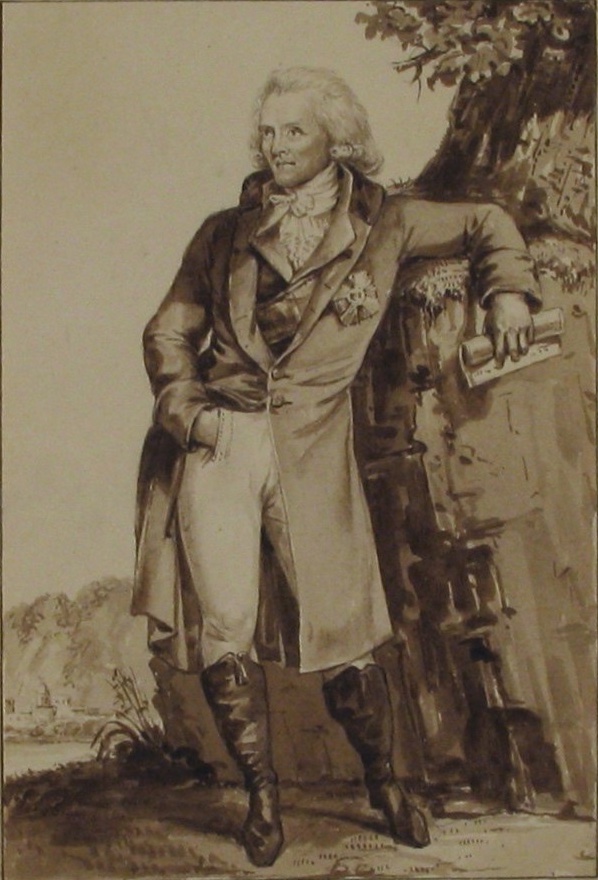
Count Rumford bores a cannon.

Ink drawing of Count Rumford, a man in a long coat and riding boots leaning against a rock under a tree, holding a rolled paper
Benjamin Thompson, Count Rumford
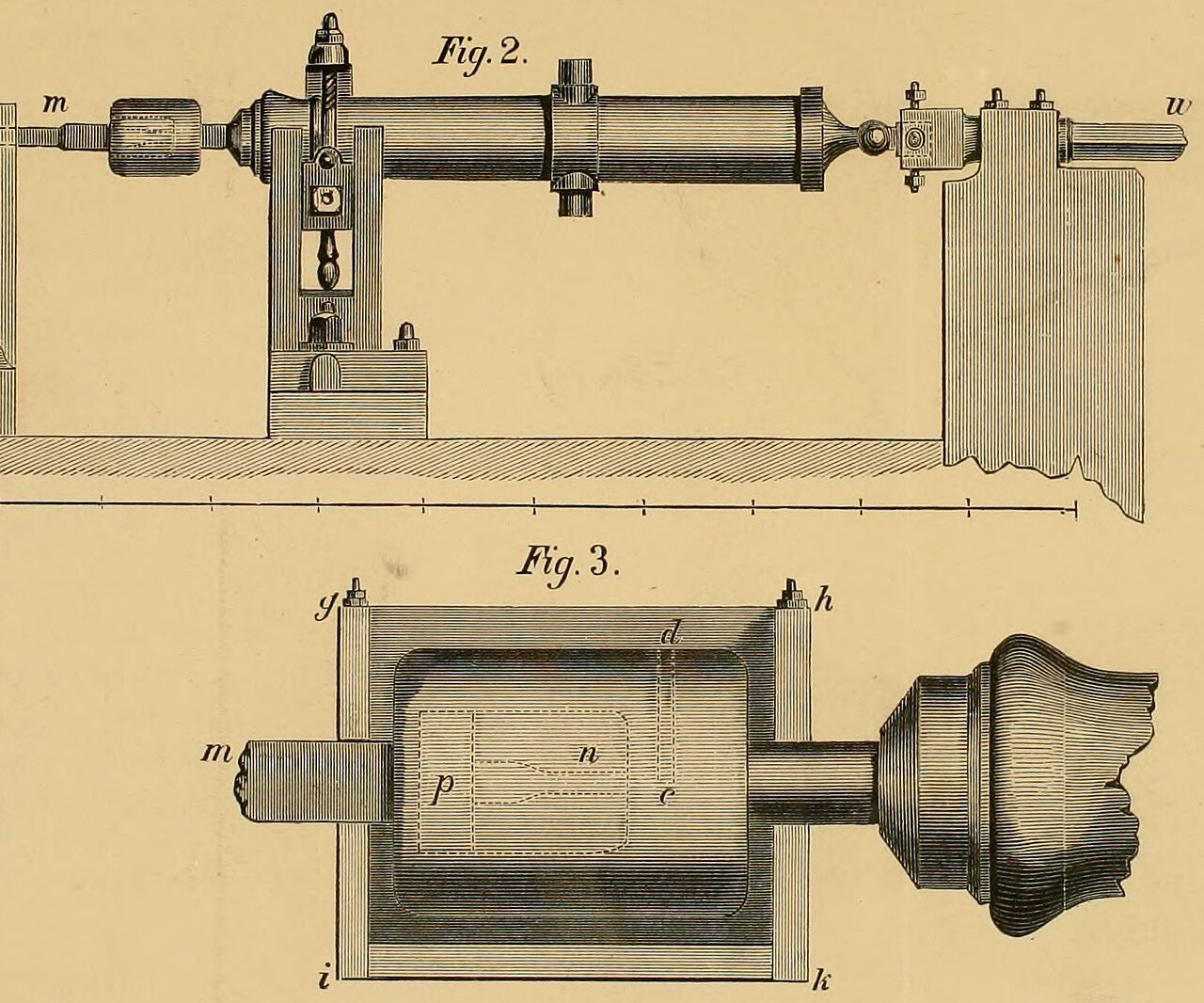
Engraving of a cannon barrel held in a boring machine, and below it a section through a box of water fitted round the end of the barrel
The barrel in its box of water (plate of 1870, after his paper)
  • In 1798 heat was thought to be a fluid, caloric, that could not be made or destroyed
  • At the Munich arsenal, a blunt borer turned in a barrel under water
  • The water boiled in about two and a half hours, and went on boiling
A supply that never runs out cannot be a substance. What the borer gave the metal was motion.

Portrait: Jean François Bozio, Metropolitan Museum of Art, CC0 (cropped). Engraving: The Complete Works of Count Rumford, 1870, no known restrictions.

B.1 THERMAL ENERGY TRANSFERS · SL + HL

What temperature measures

Temperature and kinetic energy.

\(\bar{E}_\mathrm{k} = \dfrac{3}{2} k_\mathrm{B} T\)
  • \(\bar{E}_\mathrm{k}\): the average random kinetic energy of one particle
  • \(T\) must be in kelvin
  • \(k_\mathrm{B} = 1.38 \times 10^{-23} \,\mathrm{J} \,\mathrm{K}^{-1}\), the Boltzmann constant
A molecule of air in a room at 27 °C \(T = 27 + 273 = 300 \,\mathrm{K}\) \(\bar{E}_\mathrm{k} = \dfrac{3}{2} k_\mathrm{B} T = \dfrac{3}{2} \times 1.38 \times 10^{-23} \times 300\) \(\bar{E}_\mathrm{k} = \class{res}{6.2 \times 10^{-21} \,\mathrm{J}}\)
B.1 THERMAL ENERGY TRANSFERS · SL + HL

The energy inside a body

Internal energy.

Total random

Kinetic energy

From the random motion of the molecules. Rises with temperature

+

Total intermolecular

Potential energy

From the forces between the molecules. Changes with their separation, so with the phase

=

The sum, for all the molecules

Internal energy

A property of the whole body, in joules

Temperature is about the average kinetic energy of one molecule. Internal energy is the total for all of them.
B.1 THERMAL ENERGY TRANSFERS · SL + HL

Which way the energy goes

Thermal energy flows from hot to cold.

TWO BLOCKS IN CONTACTPRESS → TO PLAY
  • The temperature difference sets the direction of the resultant transfer
  • It stops when the temperatures are equal: thermal equilibrium
  • The final temperature is not usually half way between
B.1 THERMAL ENERGY TRANSFERS · SL + HL

Quick check

Particles and temperature.

01Convert 37 °C to kelvin.

310 K

02A liquid is heated by 15 °C. What is the rise in kelvin?

15 K

03The kelvin temperature of a gas doubles. The average kinetic energy of a molecule?

It doubles

04Which two kinds of energy make up internal energy?

Random kinetic and intermolecular potential

05What decides the direction of thermal energy transfer?

The temperature difference

06A 2.0 m³ tank holds 1600 kg of oil. Density?

\(\frac{1600}{2.0} = 800 \,\mathrm{kg} \,\mathrm{m}^{-3}\)
PRESS → TO REVEAL EACH ANSWER

Part 02

Heating and changes of phase.

How much energy it takes to warm a substance, and to melt or boil it

B.1 THERMAL ENERGY TRANSFERS · SL + HL

Energy to change the temperature

Specific heat capacity.

\(Q = mc \Delta T\)
  • \(c\): the energy to raise the temperature of 1 kg by 1 K
  • Unit: \(\mathrm{J} \,\mathrm{kg}^{-1} \,\mathrm{K}^{-1}\)
  • A property of the substance, and of its phase
Substance (approximate values)\(c\) / J kg⁻¹ K⁻¹
Water4200
Ice2100
Aluminum900
Copper390
Lead130
B.1 THERMAL ENERGY TRANSFERS · SL + HL

Worked example

Boiling a kettle.

1.2 kg of water at 18 °C is heated to 100 °C by a 2.0 kW element \(c = 4200 \,\mathrm{J} \,\mathrm{kg}^{-1} \,\mathrm{K}^{-1}\) \(Q = mc \Delta T\) \(Q = 1.2 \times 4200 \times (100 - 18)\) \(Q = \class{res}{4.1 \times 10^{5} \,\mathrm{J}}\)
The time it takes \(P = \dfrac{Q}{t}\)  so  \(t = \dfrac{Q}{P}\) \(t = \dfrac{4.1 \times 10^{5}}{2.0 \times 10^{3}}\) \(t = \class{res}{2.1 \times 10^{2} \,\mathrm{s}}\)
B.1 THERMAL ENERGY TRANSFERS · SL + HL

An electrical method

Measuring specific heat capacity.

1.0 kg block · 48 W heater for 300 s · rise of 15 K \(Pt = mc \Delta T\) \(c = \dfrac{Pt}{m \Delta T} = \dfrac{48 \times 300}{1.0 \times 15}\) \(c = \class{res}{960 \,\mathrm{J} \,\mathrm{kg}^{-1} \,\mathrm{K}^{-1}}\)
Accepted value for aluminum: 900. Energy lost to the room makes the result too high.
A HEATED METAL BLOCK
B.1 THERMAL ENERGY TRANSFERS · SL + HL

Worked example

Hot copper into cold water.

0.20 kg of copper at 100 °C goes into 0.50 kg of water at 20 °C \(c_\mathrm{Cu} = 390\) · \(c_\mathrm{w} = 4200 \,\mathrm{J} \,\mathrm{kg}^{-1} \,\mathrm{K}^{-1}\) · final temperature \(T\) \(Q_\mathrm{Cu} + Q_\mathrm{w} = 0\) \(m_\mathrm{Cu} c_\mathrm{Cu} (T - 100) + m_\mathrm{w} c_\mathrm{w} (T - 20) = 0\) \(78 (T - 100) + 2100 (T - 20) = 0\)
\(7800 + 42\,000 = 2178\,T\) \(T = \dfrac{49\,800}{2178}\) \(T = \class{res}{23 \,{}^{\circ}\mathrm{C}}\)
B.1 THERMAL ENERGY TRANSFERS · SL + HL

Heating ice until it is steam

Changes of phase.

  • Sloping parts: the temperature rises, \(Q = mc \Delta T\)
  • Flat parts: the phase changes at constant temperature
  • The energy goes into potential energy, not kinetic
  • Cooling runs the graph backwards: condensing and freezing release energy
WATER HEATED AT A STEADY RATE
B.1 THERMAL ENERGY TRANSFERS · SL + HL

Energy to change the phase

Specific latent heat.

\(Q = mL\)
  • \(L\): the energy to change the phase of 1 kg at constant temperature
  • Unit: \(\mathrm{J} \,\mathrm{kg}^{-1}\)
  • Fusion: solid ⇌ liquid. Vaporization: liquid ⇌ gas
Water\(L\) / J kg⁻¹
Fusion, at 0 °C\(3.34 \times 10^{5}\)
Vaporization, at 100 °C\(2.26 \times 10^{6}\)
B.1 THERMAL ENERGY TRANSFERS · SL + HL

The story · Glasgow, about 1761

Background story · not assessed

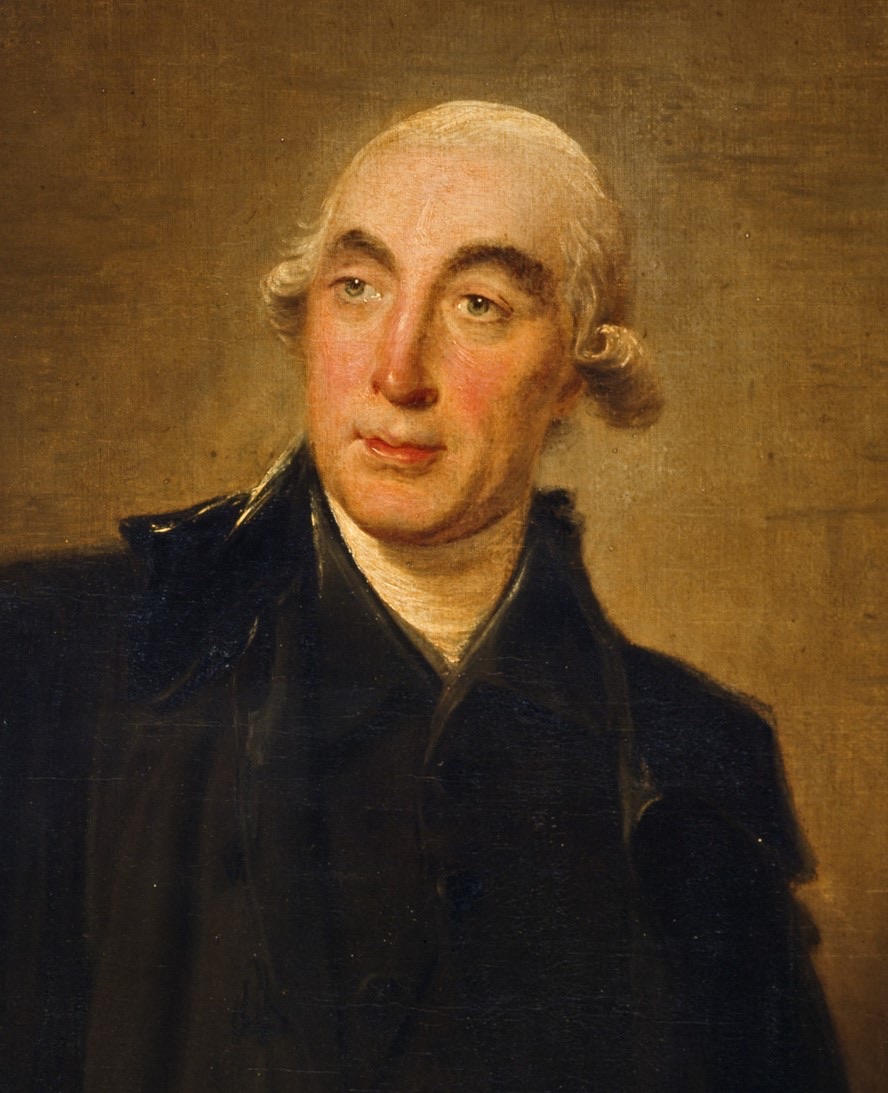
Joseph Black and the hidden heat.

Painted portrait of Joseph Black, an older man with white hair at the sides of his head, wearing a dark gown
Joseph Black, painted by David Martin in 1787
  • A professor at Glasgow, he noticed that melting ice takes in heat without getting warmer
  • Boiling water does the same: more steam, no rise in temperature
  • He called the heat latent. He had already found that different substances need different amounts of heat to warm up
  • His friend at Glasgow, James Watt, went on to transform the steam engine, with Black’s support
Both \(Q = mL\) and \(Q = mc \Delta T\) go back to Black.

Portrait: David Martin, 1787, photograph CC BY-SA 4.0.

B.1 THERMAL ENERGY TRANSFERS · SL + HL

Worked example

Ice from the freezer.

0.050 kg of ice at −18 °C becomes water at 20 °C Warm the ice to 0 °C \(Q_{1} = mc_\mathrm{ice} \Delta T = 0.050 \times 2100 \times 18 = 1.9 \times 10^{3} \,\mathrm{J}\) Melt it \(Q_{2} = mL = 0.050 \times 3.34 \times 10^{5} = 1.67 \times 10^{4} \,\mathrm{J}\) Warm the water to 20 °C \(Q_{3} = mc_\mathrm{w} \Delta T = 0.050 \times 4200 \times 20 = 4.2 \times 10^{3} \,\mathrm{J}\)
\(Q = Q_{1} + Q_{2} + Q_{3}\) \(Q = \class{res}{2.3 \times 10^{4} \,\mathrm{J}}\)
Nearly three quarters of it is the melting.
B.1 THERMAL ENERGY TRANSFERS · SL + HL

Two ways from liquid to gas

Boiling and evaporation.

Boiling

At one temperature, throughout the liquid

Bubbles of vapor form inside the liquid. The temperature stays at the boiling point while energy is supplied

Evaporation

At any temperature, from the surface

The fastest molecules near the surface escape. Those left behind have less energy on average, so the liquid cools

Both need the specific latent heat of vaporization for every kilogram that changes phase.
B.1 THERMAL ENERGY TRANSFERS · SL + HL

Quick check

Heating and changes of phase.

01Energy to warm 2.0 kg of water by 10 K? (\(c\) = 4200 J kg⁻¹ K⁻¹)

\(2.0 \times 4200 \times 10 = 8.4 \times 10^{4} \,\mathrm{J}\)

02The same energy goes into 2.0 kg of copper. Larger or smaller rise?

Larger: copper has a smaller \(c\)

03What happens to the temperature while a pure solid melts?

It stays constant

04Which energy of the molecules rises during melting?

Their potential energy

05Energy to boil away 0.10 kg of water at 100 °C? (\(L = 2.26 \times 10^{6} \,\mathrm{J} \,\mathrm{kg}^{-1}\))

\(0.10 \times 2.26 \times 10^{6} = 2.3 \times 10^{5} \,\mathrm{J}\)

06Why does evaporation cool a liquid?

The fastest molecules leave
PRESS → TO REVEAL EACH ANSWER

Part 03

Conduction and convection.

Two of the three ways thermal energy gets from one place to another

B.1 THERMAL ENERGY TRANSFERS · SL + HL

How thermal energy is transferred

Three mechanisms.

Conduction

Passed from particle to particle

The particles stay where they are. Best in solids, above all in metals

Convection

Carried by a moving fluid

Warm fluid rises and cool fluid sinks. Liquids and gases only

Radiation

Emitted as electromagnetic waves

Needs no medium at all. The only way across empty space

B.1 THERMAL ENERGY TRANSFERS · SL + HL

Particle to particle

Conduction.

  • Particles at the hot end have more kinetic energy
  • They pass it to their neighbors through the forces between them
  • In a metal, free electrons carry energy much further and faster
  • Gases conduct poorly: the molecules are far apart
A BAR BETWEEN HOT AND COLD
B.1 THERMAL ENERGY TRANSFERS · SL + HL

How fast energy is conducted

The rate of conduction.

\(\dfrac{\Delta Q}{\Delta t} = -kA \dfrac{\Delta T}{\Delta x}\)
  • \(k\): the thermal conductivity of the material, in \(\mathrm{W} \,\mathrm{m}^{-1} \,\mathrm{K}^{-1}\)
  • \(A\): the cross-sectional area the energy passes through
  • \(\dfrac{\Delta T}{\Delta x}\): the signed temperature gradient
Material (approximate values)\(k\) / W m⁻¹ K⁻¹
Copper400
Aluminum240
Glass0.80
Brick0.60
Still air0.025
B.1 THERMAL ENERGY TRANSFERS · SL + HL

Worked example

Energy lost through a window.

Glass: area 1.5 m² · thickness 4.0 mm · \(k = 0.80 \,\mathrm{W} \,\mathrm{m}^{-1} \,\mathrm{K}^{-1}\) Positive \(x\): from the 12 °C face to the 7.0 °C face \(\dfrac{\Delta Q}{\Delta t} = -kA \dfrac{\Delta T}{\Delta x}\) \(\dfrac{\Delta Q}{\Delta t} = -0.80 \times 1.5 \times \dfrac{7.0 - 12}{4.0 \times 10^{-3}}\) \(\dfrac{\Delta Q}{\Delta t} = \class{res}{1.5 \times 10^{3} \,\mathrm{W}}\)
  • In one hour: \(1500 \times 3600 = 5.4 \times 10^{6} \,\mathrm{J}\)
  • Glass twice as thick: half the rate
  • Two panes with still air between: far less
B.1 THERMAL ENERGY TRANSFERS · SL + HL

Carried by a moving fluid · described, not calculated

Convection.

  • The heated fluid expands: it becomes less dense
  • Less dense fluid rises; cooler, denser fluid sinks to replace it
  • The fluid itself moves, carrying its energy with it
  • Not possible in a solid
A LIQUID HEATED FROM BELOW
B.1 THERMAL ENERGY TRANSFERS · SL + HL

Quick check

Conduction and convection.

01Which mechanism cannot happen in a solid?

Convection

02Why are metals the best conductors?

Free electrons carry the energy

03A wall is made twice as thick. The rate of conduction?

It halves

04What is the unit of thermal conductivity?

W m⁻¹ K⁻¹

05Why does warm fluid rise?

It expands and becomes less dense

06Why is trapped air a good insulator?

Poor conductor, and it cannot convect
PRESS → TO REVEAL EACH ANSWER

Part 04

Thermal radiation.

Every body emits electromagnetic waves because of its temperature

B.1 THERMAL ENERGY TRANSFERS · SL + HL

Emission from a surface

Thermal radiation and black bodies.

  • Every surface above absolute zero emits electromagnetic waves
  • At everyday temperatures, almost all of it is infrared
  • A black body absorbs all the radiation that falls on it, and is also the best possible emitter

Near enough black

A star

Its spectrum is close to a black body’s

Near enough black

A small hole in a hot oven

Whatever goes in is absorbed inside

Far from black

A polished metal surface

Reflects most radiation and emits little

B.1 THERMAL ENERGY TRANSFERS · SL + HL

The power a black body radiates

The Stefan–Boltzmann law.

\(L = \sigma A T^{4}\)
  • \(L\): the luminosity, the total power radiated, in watts
  • \(A\): the surface area of the body
  • \(\sigma = 5.67 \times 10^{-8} \,\mathrm{W} \,\mathrm{m}^{-2} \,\mathrm{K}^{-4}\)
The Sun: radius \(6.96 \times 10^{8} \,\mathrm{m}\) · surface at 5800 K \(A = 4 \pi R^{2} = 4 \pi \times (6.96 \times 10^{8})^{2} = 6.09 \times 10^{18} \,\mathrm{m}^{2}\) \(L = \sigma A T^{4}\) \(L = 5.67 \times 10^{-8} \times 6.09 \times 10^{18} \times 5800^{4}\) \(L = \class{res}{3.9 \times 10^{26} \,\mathrm{W}}\)
B.1 THERMAL ENERGY TRANSFERS · SL + HL

The story · Vienna, 1879

Background story · not assessed

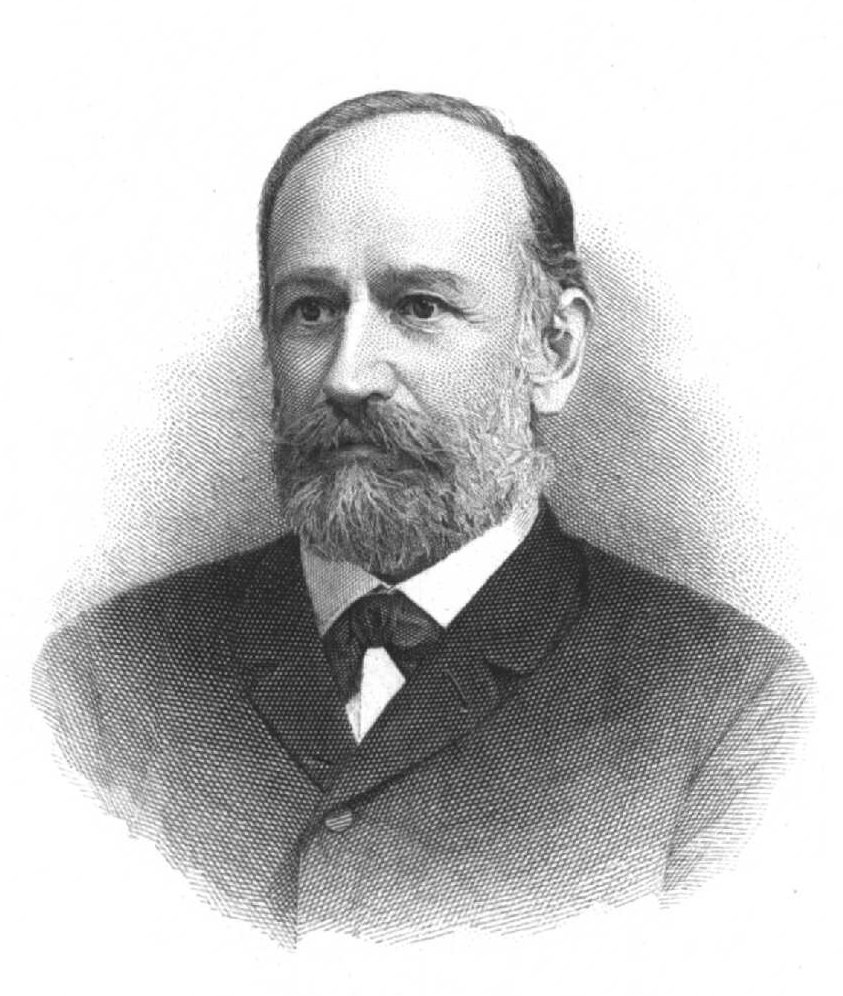
Stefan takes the temperature of the Sun.

Engraved portrait of Josef Stefan, a bearded man in a dark jacket and bow tie
Josef Stefan, director of the Physical Institute in Vienna
  • In 1879 Stefan studied other people’s measurements of hot bodies cooling, and spotted the pattern: power \(\propto T^{4}\)
  • He used it on sunlight and found the Sun’s surface to be about 5430 °C: the first sensible value
  • Today’s value is about 5500 °C
  • In 1884 his former student Ludwig Boltzmann derived the law from theory
A law found in a laboratory in Vienna measured a star 150 million kilometers away.

Portrait: K. Schönbauer, by 1893, public domain.

B.1 THERMAL ENERGY TRANSFERS · SL + HL

What reaches the observer

Apparent brightness.

\(b = \dfrac{L}{4 \pi d^{2}}\)
  • \(b\): the power received per unit area, in \(\mathrm{W} \,\mathrm{m}^{-2}\)
  • The power \(L\) spreads over a sphere of area \(4 \pi d^{2}\)
  • An inverse square law: twice as far, a quarter as bright
THE SAME POWER, A LARGER SPHERE
B.1 THERMAL ENERGY TRANSFERS · SL + HL

Worked example

Sunlight at the Earth.

\(L = 3.9 \times 10^{26} \,\mathrm{W}\) · Earth–Sun distance \(d = 1.50 \times 10^{11} \,\mathrm{m}\) \(b = \dfrac{L}{4 \pi d^{2}}\) \(b = \dfrac{3.9 \times 10^{26}}{4 \pi \times (1.50 \times 10^{11})^{2}}\) \(b = \class{res}{1.4 \times 10^{3} \,\mathrm{W} \,\mathrm{m}^{-2}}\)
  • This is the solar constant, \(S\): \(1.36 \times 10^{3} \,\mathrm{W} \,\mathrm{m}^{-2}\) in the data booklet
  • At Mars, 1.5 times as far: \(\dfrac{1}{1.5^{2}} = 0.44\) of this
B.1 THERMAL ENERGY TRANSFERS · SL + HL

Color and temperature

The black-body spectrum and Wien’s law.

\(\lambda_\mathrm{max} T = 2.9 \times 10^{-3} \,\mathrm{m} \,\mathrm{K}\)
  • A black body emits a continuous spectrum
  • \(\lambda_\mathrm{max}\): the wavelength of the peak
  • Hotter: a shorter peak wavelength
THREE TEMPERATURESFROM PLANCK’S LAW
B.1 THERMAL ENERGY TRANSFERS · SL + HL

Worked example

A temperature from a peak wavelength.

Sunlight is most intense at 500 nm \(\lambda_\mathrm{max} T = 2.9 \times 10^{-3} \,\mathrm{m} \,\mathrm{K}\) \(T = \dfrac{2.9 \times 10^{-3}}{\lambda_\mathrm{max}} = \dfrac{2.9 \times 10^{-3}}{500 \times 10^{-9}}\) \(T = \class{res}{5.8 \times 10^{3} \,\mathrm{K}}\)
A lamp filament at 2800 K \(\lambda_\mathrm{max} = \dfrac{2.9 \times 10^{-3}}{T} = \dfrac{2.9 \times 10^{-3}}{2800}\) \(\lambda_\mathrm{max} = \class{res}{1.0 \times 10^{-6} \,\mathrm{m}}\) In the infrared: most of its output is not light
B.1 THERMAL ENERGY TRANSFERS · SL + HL

Quick check

Thermal radiation.

01What is a black body?

It absorbs all the radiation falling on it

02The kelvin temperature of a black body doubles. Its power?

16 times as great

03A star is moved three times as far away. Its apparent brightness?

One ninth

04Which is hotter: a red star or a blue star?

The blue star

05A star has \(\lambda_\mathrm{max}\) = 290 nm. Its surface temperature?

\(\frac{2.9 \times 10^{-3}}{2.9 \times 10^{-7}} = 1.0 \times 10^{4} \,\mathrm{K}\)

06What is the unit of apparent brightness?

W m⁻²
PRESS → TO REVEAL EACH ANSWER

Summary

Thermal energy transfers on one slide.

Temperature

\(\bar{E}_\mathrm{k} = \frac{3}{2} k_\mathrm{B} T\)

In kelvin: \(T = \theta + 273\)
Internal energy = kinetic + potential

Heating

\(Q = mc \Delta T\)

The temperature changes
The kinetic energy changes

Changing phase

\(Q = mL\)

The temperature is constant
The potential energy changes

Conduction

\(\frac{\Delta Q}{\Delta t} = -kA \frac{\Delta T}{\Delta x}\)

Convection: a fluid moves because its density changes

Black-body radiation

\(L = \sigma A T^{4}\)

Apparent brightness \(b = \frac{L}{4 \pi d^{2}}\)

Wien’s law

\(\lambda_\mathrm{max} T = 2.9 \times 10^{-3}\) m K

Hotter: a shorter peak wavelength

B.1 THERMAL ENERGY TRANSFERS · SL + HL

Summary

Key words.

Absolute temperatureIn kelvin; proportional to the average kinetic energy of a particle
Internal energyTotal random kinetic plus intermolecular potential energy
Thermal equilibriumSame temperature: no resultant transfer
Specific heat capacityEnergy to warm 1 kg by 1 K
Specific latent heatEnergy to change the phase of 1 kg at constant temperature
Thermal conductivityHow well a material conducts
Black bodyA perfect absorber and the best emitter
LuminosityTotal power radiated, in W
Apparent brightnessPower received per unit area, in W m⁻²
B.1 THERMAL ENERGY TRANSFERS · SL + HL